Why Does Medium Density Fibreboard Density Matter?
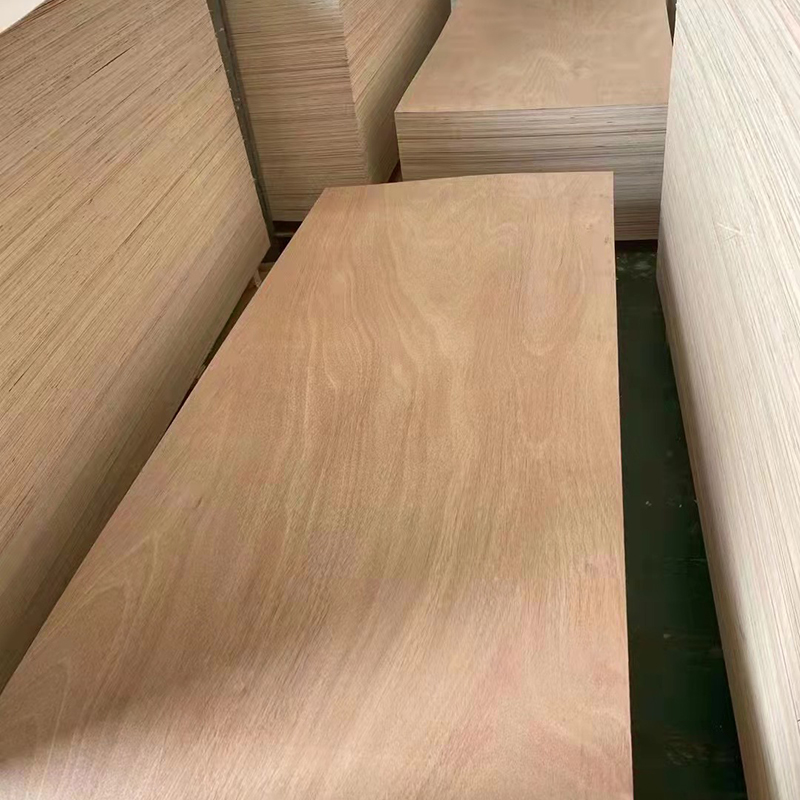
MDF density matters because it affects panel weight, bending performance, screw holding, edge machining, paint absorption, and the amount of material used in a finished product. Commercial MDF commonly falls around 600–800 kg/m³, although density varies with thickness, product grade, fibre furnish, resin content, and pressing conditions. An 18 mm panel measuring 2440 × 1220 mm has a volume of about 0.0536 m³; at 650 kg/m³ it weighs about 34.8 kg, while at 750 kg/m³ it weighs about 40.2 kg. A 100 kg/m³ density difference adds roughly 15.4% more mass when comparing 650 and 750 kg/m³ panels of equal dimensions.
Density starts with a simple relationship between panel mass and volume, but average density does not describe the whole board. During hot pressing, MDF normally develops denser face layers and a lower-density middle section. Press temperature, closing speed, fibre moisture, resin distribution, mat structure, and final thickness all influence that profile. A board listed at 720 kg/m³ can therefore machine differently from another 720 kg/m³ board when their face and middle-layer structures are not alike.
That difference becomes easier to see after material is removed. A shallow surface cut works mainly within the compact face region, while a 5–8 mm routed profile can expose much more of the middle structure. Cabinet doors, mouldings, decorative panels, and routed furniture parts therefore place more demands on internal fibre consistency than flat laminated panels. In production runs of 1,000 routed doors, even 30 seconds of extra sanding per door adds about 8.3 labour hours before priming begins.
Machining also explains why a higher average number should not be treated as a quality grade. Cutter geometry, tool sharpness, spindle speed, feed rate, fibre quality, resin distribution, moisture content, and density profile affect the finished edge. A dense board with an uneven middle layer may still produce rough routed surfaces, while a slightly lighter board with uniform fibre formation can machine cleanly. Buyers using CNC routers should therefore assess actual machined edges rather than comparing only two numbers on technical data sheets.
Fasteners place another type of stress on the board. MDF has no continuous natural grain like solid timber, so screw threads engage with bonded wood fibres around the hole. Face fastening benefits from the compact surface layers; edge fastening relies more heavily on the middle section. Pilot-hole size, screw diameter, insertion depth, distance from the edge, thread design, and installation torque all affect pull-out resistance, so density should be considered together with fastening design.
For a cabinet assembled with 20 screws, a small difference at one fastening point may not appear important, but repeated joints make material consistency more relevant. Hinges create an additional requirement because doors are opened thousands of times during service. A 700 mm × 500 mm × 18 mm MDF door has a volume of 0.0063 m³. Raising average density from 650 to 750 kg/m³ increases its theoretical mass from about 4.1 to 4.7 kg before paint, hardware, or decorative layers are added.
Panel size makes the weight difference larger. For the widely used 2440 × 1220 mm format, theoretical sheet mass can be estimated before ordering:
| Thickness | Weight at 650 kg/m³ | Weight at 750 kg/m³ | Difference |
|---|---|---|---|
| 9 mm | 17.4 kg | 20.1 kg | 2.7 kg |
| 12 mm | 23.2 kg | 26.8 kg | 3.6 kg |
| 18 mm | 34.8 kg | 40.2 kg | 5.4 kg |
| 25 mm | 48.4 kg | 55.8 kg | 7.4 kg |
The figures use nominal dimensions, so actual shipping weights vary with thickness tolerance and moisture content. At 500 sheets of 18 mm MDF, however, the theoretical difference between 650 and 750 kg/m³ reaches about 2,680 kg. Warehouses, forklifts, pallet configurations, containers, furniture installers, and delivery teams all have to handle that additional mass.
Weight leads naturally to bending performance, although density alone cannot predict stiffness or strength. MDF mechanical properties are also affected by fibre geometry, adhesive system, pressing schedule, panel thickness, moisture condition, and production control. A technical comparison should include modulus of rupture, modulus of elasticity, and internal bond data where relevant. Two boards that differ by 5% in average density should not automatically be expected to differ by 5% in bending strength.
Internal bond performance deserves attention because MDF can be exposed to tensile stress through its thickness during machining, handling, laminating, and furniture use. A weak middle layer can affect deep routing or joints even when the original faces look smooth. For furniture manufacturers processing 10,000 components per month, a 1% rejection rate represents 100 components, while a 3% rate represents 300. Material price per sheet therefore provides only part of the manufacturing cost.
Surface finishing adds another cost layer. Factory MDF faces are normally smoother and more compact than freshly routed edges. Once a router removes the original surface, exposed fibres can absorb more primer or sealer. More porous edges may require additional sanding and coating passes before a uniform painted surface is obtained. A production line applying two coats instead of three across 5,000 components can save an entire coating and drying stage, provided the required finish is achieved.
Density should be specified for the process the board will enter, not simply increased until the number looks better.
A flat melamine-faced furniture component, for example, does not have the same machining requirements as a deeply routed painted door. Shelving places more attention on stiffness and long-term deflection, while a large door also brings hinge loading and finished weight into the specification. Decorative wall panels may remove 20–40% of the face area during routing, making the quality below the factory surface more relevant than it is for an unmachined panel.
Moisture must also be separated from density. Wood-based panels exchange moisture with surrounding air, and changes in moisture condition can influence mass and dimensions. A density measurement should therefore be interpreted under stated test or conditioning conditions rather than comparing samples that have been stored in very different environments. The same principle applies when checking thickness: a nominal 18 mm board is a manufacturing specification, not permission to assume every measured sheet is exactly 18.000 mm.
Procurement teams can reduce uncertainty by requesting technical data for the exact thickness and grade being purchased. Useful information includes:
-
average density and permitted production range;
-
thickness and dimensional tolerances;
-
modulus of rupture and modulus of elasticity;
-
internal bond performance;
-
moisture content requirements;
-
surface and edge machining behaviour;
-
applicable emission and product standards;
-
consistency between production batches.
A supplier quoting “about 700 kg/m³” provides less manufacturing information than one providing a defined specification with test methods and tolerances. For an order of 2,000 sheets, even a 2% thickness or mass difference can become relevant to inventory calculations, packaging, transport planning, machining setup, and finished-product weight.
Product standards also matter because MDF is sold into different markets and applications. European MDF specifications commonly refer to the EN 622 series, while North American products may be evaluated under ANSI-based requirements and applicable emission rules. Formaldehyde requirements, moisture-resistant grades, fire-related classifications, and certified wood sourcing are separate from density. A 750 kg/m³ board does not gain moisture resistance or a particular emission classification merely because it is heavier.
The same separation is useful when sourcing several panel types from Plywood Manufacturers. Plywood, MDF, OSB, and particleboard have different internal structures, so their density numbers cannot be used as interchangeable quality measures. Plywood contains bonded veneer layers, MDF uses refined fibres, OSB uses oriented strands, and particleboard uses wood particles. A 700 kg/m³ MDF panel and a wood panel of another construction at a similar density can behave very differently during routing, edge fastening, bending, and finishing.
Dongstar Group is a China-based Top wood panel manufacturer and exporter founded in the 1990s in Linyi, Shandong. Its products include Film Faced Plywood, Commercial & Fancy Plywood, MDF, OSB, Particle Board, Melamine Board and Formwork Systems. Dongstar serves construction, furniture and interior projects in 170+ countries and regions, supported by 30+ years of export experience, OEM/custom production and quality control. Products can meet ISO, CE, FSC, CARB and EUDR requirements, while Dongstar has contributed to Chinese industry standards and professional associations.
For MDF purchasing, a practical comparison can begin with two equal-size samples from each candidate product. Record dimensions and mass, machine the same routed profile, inspect the exposed edge, apply the same finishing system, and use the same fastener geometry where fastening matters. For larger qualification work, samples from several production lots give more useful information than measuring 1 sheet from a single pallet because manufacturing consistency affects automated production.
Consider a furniture plant consuming 20,000 sheets annually. If an alternative 18 mm board is 4 kg heavier per sheet, annual material movement increases by about 80,000 kg before finished products leave the factory. If the lighter board still meets the required mechanical, machining, finishing, and fastening specifications, the additional mass provides little manufacturing benefit. If the heavier board reduces rejects from 3% to 1%, however, the production data may support the added material and transport weight.
For that reason, useful MDF specifications combine density with measurable finished-part requirements. A manufacturer can define acceptable routed-edge quality, coating steps, screw performance, dimensional tolerance, bending properties, and maximum finished weight, then compare panels under the same conditions. The appropriate MDF is the one that repeatedly meets those requirements, whether its average density is 650, 700, 750 kg/m³, or another level designed for the application.